

Technology, Politics, Mind. Since 2014.
Category

Business

The economy of building technology — markets, startups, capital flows, and the operating decisions behind ambitious companies.

8,468 articles · Business

Business

Microsoft Japan gave roughly 2,300 employees five consecutive Fridays off in August 2019 without cutting their pay — and sales per employee came in 39.9% higher than the same month a year earlier. The experiment also forced a rethink of wasted work: 30-minute meetings became 46% more common, while employees increasingly replaced meetings with online collaboration.

Microsoft Japan's 39.9% sales-per-employee comparison was real, but the company said the trial did not cause it alone. The meeting redesign is the experiment's more direct lesson.

Business

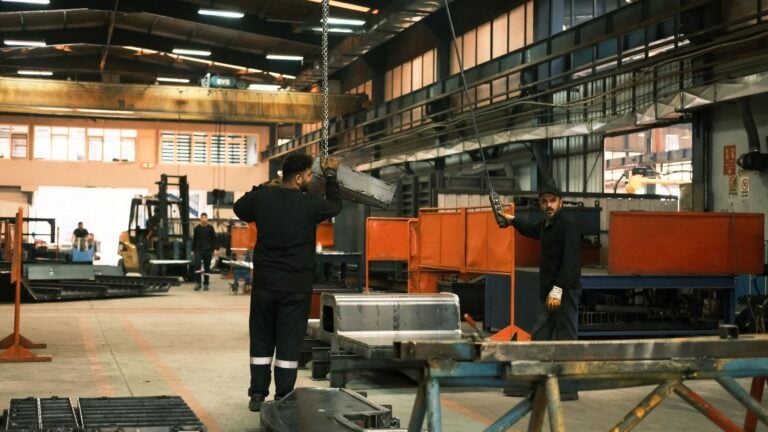
In 1926, Henry Ford cut his factory workers from six days a week to five and discovered something industry considered deeply counterintuitive: Ford's own experiments showed they could produce at least as much in 40 hours as they had in 48 — an idea manufacturers across America would eventually adopt.

Ford said its factories could produce at least as much in 40 hours as in 48. The claim came from repeated operating changes, not a controlled scientific trial.

Business

How did a Nordic company that started by making rubber boots and paper pulp become the world's biggest mobile phone maker by 2000, then lose almost all of it inside seven years?

Nokia went from Finnish rubber-boot maker to the world's dominant mobile phone company, then lost almost all of it in seven years. The collapse wasn't about missing the iPhone — it was about what happens when a confident company stops listening to its own engineers.

Energy

The Clarion-Clipperton Zone’s nodules are estimated to contain more nickel and cobalt than all terrestrial reserves — but commercial mining is still waiting on permits and an unfinished global rulebook

The Clarion-Clipperton Zone contains more cobalt, nickel, manganese, and copper than every land-based reserve combined. After 150 years untouched, commercial extraction is now measured in months, not decades — and the science needed to regulate it is still being gathered.

Business

Sociologist Arlie Hochschild coined the term 'emotional labor' in 1983 to describe flight attendants — four decades on, the same unpaid work has migrated into friendships, families and Slack channels

Arlie Hochschild's 1983 concept described the paid smile in an airline cabin. Four decades later, the same unpaid work runs through friendships, families and Slack channels — and the people carrying it are the last to notice they're working.