

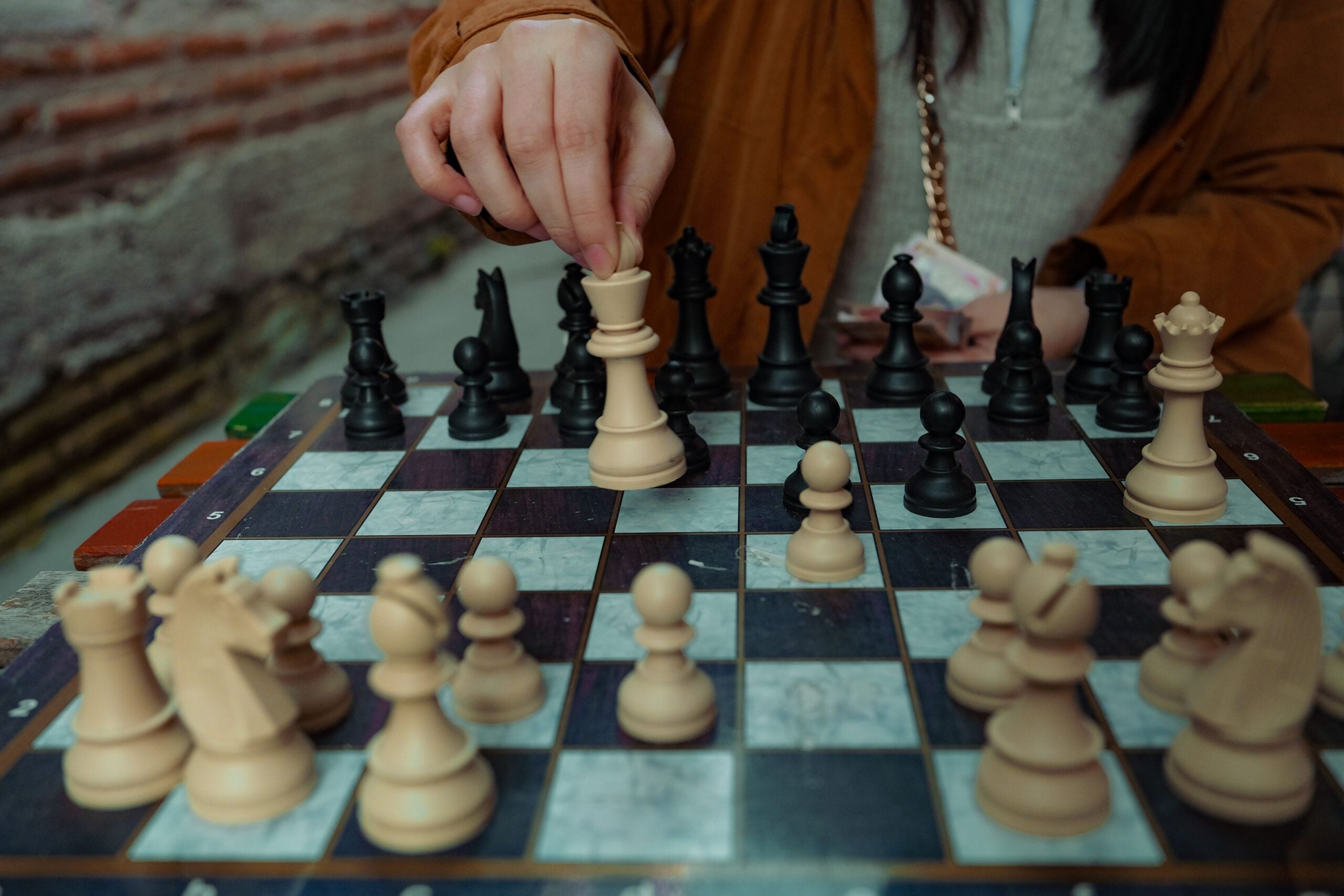
There is a small performance we often expect around serious decisions. The person should pause, narrow their eyes, perhaps go back over the options once more. If the answer comes too quickly, it can feel as though they have not given the problem the respect it deserves.
Chess should be the perfect setting for that intuition. The board is complex, the consequences are immediate and a player who moves carelessly can throw away hours of excellent work. Yet a large new analysis found the opposite pattern: across more than 215,000 professional moves, faster decisions were consistently associated with better ones.
The interesting part is not that speed secretly makes us wise. It almost certainly does not. The interesting part is that, among experts, hesitation may tell us something about the uncertainty already inside the decision.
This is one study, not settled consensus. It is also an observational study of elite chess, not a general instruction to rush important choices. Read carefully, though, it offers a genuinely useful way to think about expertise, intuition and what a long pause actually means.
What the study actually measured
Economists Uwe Sunde, Dainis Zegners and Anthony Strittmatter examined around 3,600 in-person games played by professionals rated at least 2500 Elo. Their paper was published in PNAS in May 2026 and included more than 80,000 moves from classical games, more than 62,000 from rapid games and roughly 74,000 from blitz.
The first 15 moves by each player were removed. That is an important detail because elite openings can come straight from memory and preparation. The researchers wanted decisions that were more likely to have been worked out at the board.
They then asked Stockfish 17, one of the strongest chess engines available, to evaluate every remaining position. A human decision counted as high quality when it matched the engine’s first choice. This is a strict test. A move can be perfectly sensible, even excellent, without being the engine’s top move. Still, it provides a stable yardstick across a huge number of real decisions with real clocks running.
In classical, rapid and blitz alike, moves played sooner were more likely to match Stockfish’s preferred move.
The result survived some demanding controls
The obvious objection is that easy positions produce both quick moves and good moves. If your opponent leaves a queen hanging, spotting the best reply does not require a philosophical retreat.
The researchers could not measure everything that makes a position feel difficult to a particular player, but they did control for a lot. Their models included the amount of time remaining on the clock, the number of computational nodes Stockfish searched, the gap in value between the engine’s best and second-best choices, the move number, whether the player was ahead or behind and fixed effects comparing decisions within the same player-game pairing.
They also tested other proxies for difficulty: how many legal moves were available, how deep Stockfish searched before first identifying the best move and how stable its evaluation remained as the search deepened. They even repeated part of the analysis using Maia, an engine designed to predict human moves rather than simply crush human opponents.
The basic relationship remained. It was not merely a pile of instantaneous, obvious moves distorting the average either. As move times increased across the distribution, the probability of choosing the engine’s best move tended to fall. The authors have made the data and replication files available for others to inspect.
More time available and more time used are different things
Here is the distinction that makes the paper worth reading rather than turning into a slogan.
When players had a larger overall time budget, they tended to make better moves. But within a game, the particular moves on which they spent longer tended to be worse. Both patterns appeared at once.
That makes sense once we remember that a chess player chooses when to stop thinking. Imagine two positions. In the first, a strong candidate move appears quickly and survives a brief check. The player makes it. In the second, three plausible moves keep producing new problems. The player searches longer, not because thinking is damaging the answer, but because a good answer has not yet become clear.
The measured time is therefore partly an outcome of the player’s private uncertainty. Researchers call this endogeneity. I think the plain-English version is better: sometimes a long decision is hard because it is a hard decision.
This means the study does not show that forcing the same player to move faster would improve the move. More time itself may help. What the clock reveals is that the player needed that time, and needing it can signal that recognition was weak or the alternatives were unusually difficult to separate.
Why this is not a licence to rush
A separate 2026 study examined high-stakes games by 20 grandmasters, including seven world champions. Looking within players, its authors found that serious time pressure increased the likelihood of blunders. Elite players also appeared to allocate time strategically, slowing down when a position called for more deliberation.
There is a useful contrast in earlier research discussed by Kellogg. In a study drawing on about 200 million online chess moves, having extra decision time improved performance, and masters sometimes gained more from it than less experienced players. That work used a different design and focused on different decision situations, so it does not cancel the new paper. It helps define the boundary.
Time pressure asks what happens when the clock restricts a person. Decision time asks how long the person chose to think. Those are not interchangeable questions.
“Trust your gut” is therefore too crude. Expert intuition is often compressed experience: patterns recognised quickly because someone has studied thousands of related positions and received relentless feedback. But when the pattern is unclear, good experts do not become less expert by checking. The danger lies in confusing fast recognition with hurried guessing.
What hesitation can tell us about expertise
The authors’ interpretation is a form of sequential search. A player keeps gathering and evaluating information until the case for one move becomes strong enough to stop. A clear signal can produce an early, accurate decision. A noisy signal keeps the search going and may still end in a weaker choice.
The study did not watch thoughts forming inside the players’ heads, so that mechanism remains an interpretation, not a directly observed fact. There may also be subjective features of difficulty that no engine-based control captures. Perhaps a position clashes with one player’s style, or resembles a line another player studied last week.
Those limitations actually sharpen the useful point. Even after researchers measure a position’s objective complexity in several sophisticated ways, the time an expert takes may still reveal private difficulty that the dataset cannot otherwise see.
This does not make quickness a general personality virtue. A grandmaster can recognise a tactical pattern in seconds because chess is a narrow domain with stable rules, repeated practice and unusually clear feedback. Hiring, medical diagnosis, relationships and long-term strategy rarely offer an engine that can identify the objectively best move afterwards. Carrying the result into those areas requires humility.
A better lesson for decisions outside chess
I have written before about why repeating a meal can protect one small corner of life from low-value decisions. The chess finding looks at almost the opposite problem: novel, consequential choices made by people with deep training. In that setting, the pause itself can carry information.
If an experienced colleague takes longer than usual, the right response may be curiosity rather than judgement. Is the situation unfamiliar? Are the best options unusually close? Is important information missing? Has a familiar pattern failed to appear?
Equally, a quick answer from a genuine expert need not be dismissed as careless simply because we did not see effort on the surface. Some of the effort may have taken place over years of practice. The answer is fast now because the learning was slow.
But I would be wary of workplaces that reward speed as a proxy for competence. Once people know quickness is being scored, confident performance can replace honest uncertainty. The chess players in this study were trying to choose the best move, not to look decisive in a meeting.
That, for me, is the human lesson. A fast decision can signal that an expert recognised something clearly. A slow one can signal that the problem resisted recognition. Neither the speed nor the hesitation is automatically virtuous. The clock tells us how long the choice took; understanding why still requires judgement.